
This section presents strategic perspectives on advancing sustainable growth in developing countries by encouraging stronger engagement with the private sector. It introduces practical approaches and partnerships that contribute to job creation, expanded access to energy, and the development of future-oriented industries. Through knowledge sharing and collaboration, this section aims to highlight how inclusive engagement with private actors can complement national development goals and support resilient, self-sustaining economic progress.
Compiled by: Kyoungshin Kim, KGGTF Consultant
“Sustainomy: Redesigning the Economy for Sustainable Growth”
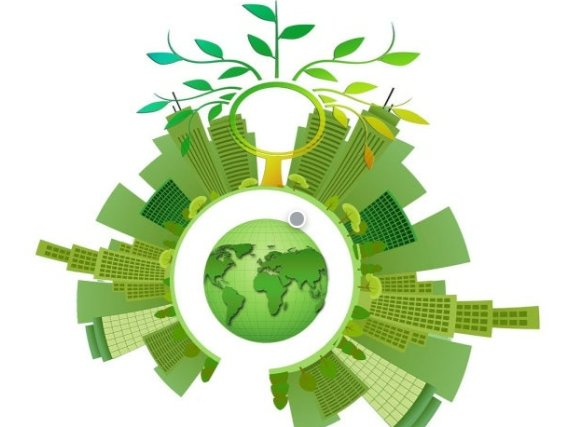
Introducing Sustainomy: An Integrated Approach to People, Planet, and Prosperity
A recent TIME article proposes a new economic paradigm—Sustainomy—which moves beyond the conventional GDP-based model of growth. Sustainomy seeks to rebalance economic systems around three fundamental pillars: Prosperity, People, and Planet. Rather than simply reducing carbon, it calls for a holistic redesign of how economies generate, distribute, and sustain wealth.
Traditional Energy is still Critical Role- Transition Gradually Structurally
Sustainomy does not advocate for the immediate or unconditional phase-out of traditional energy sources such as coal and oil.
Instead, it recognizes that these industries still play a critical role in energy security and industrial growth, particularly in many emerging economies.
Therefore, the article strongly emphasizes the need for a gradual and structured transition, not abrupt dismantling. Sudden decarbonization policies could trigger economic shocks and deepen inequality. A more effective path is to support traditional sectors in transitioning responsibly, offering incentives, investments in cleaner technologies, and workforce retraining programs to ensure long-term resilience and fairness.
Unlocking the Growth Potential of Developing Countries
Sustainomy frames developing countries and emerging middle classes as essential engines of future growth.
Today, a vast portion of the global population still lacks access to basic financial services, education, and technology, representing both an untapped resource and a missed opportunity.
By enhancing financial inclusion, digital literacy, clean infrastructure, and market participation, these regions can actively contribute to the global green transition. Supporting the build-up of sustainable industrial capacity in the Global South will be critical to delivering inclusive and lasting prosperity.
Building a Future-Ready Industrial Portfolio
To future-proof the economy, Sustainomy proposes categorizing industries into four strategic groups:
- Essential Infrastructure Industries: Core sectors like water, energy, and housing that support basic human needs
- Volatile Growth Sectors: High-risk, high-reward areas like finance and tech innovation
- Next-Generation Solutions: Emerging fields such as AI, bio-tech, green energy, and regenerative agriculture
This portfolio-based approach prevents overdependence on a single sector, facilitates managed transitions, and creates room for innovation-driven growth.
Key Insight: The Goal is Orderly Transition—Not Just Decarbonization
Ultimately, TIME argues that the path to sustainability is not only about reducing carbon but also about reengineering entire economic systems.
We must embrace a transition that is:
- Inclusive of developing economies
- Supportive of existing industries' structural evolution
- Strategically diversified through investment in future-proof technologies
We can achieve resilient, inclusive, and sustainable prosperity through such a multidimensional approach.
2025 World Development Report: “Standards for Development”
Recently, the World Bank released its flagship publication, the World Development Report 2025 (WDR 2025), titled “Standards for Development.” This year’s report emphasizes the pivotal role that standards—across economic, social, environmental, and governance dimensions—play in enabling sustainable development, especially in developing countries.
Understanding the Role of Standards in Development
The report defines standards as “formalized solutions designed for repeated and common use.” These range from technical specifications in manufacturing and infrastructure, to social and environmental protocols to data interoperability and public administration benchmarks.
According to the WDR 2025, well-designed and inclusive standards serve as critical public goods. They help reduce transaction costs, increase efficiency, ensure safety and quality, facilitate market access, and promote interoperability. When aligned with global best practices, standards can accelerate productivity, improve access to services, foster trade, and support climate-resilient, inclusive growth.
However, the report warns that when poorly chosen or implemented, or when developing countries are excluded from international standard-setting, standards can create additional costs and reinforce inequality.
Key Findings for Developing Countries
- Productivity and Trade
Standards that align with global benchmarks enhance trade by reducing non-tariff barriers and improving product quality. This is especially critical for small and medium enterprises (SMEs) in developing economies seeking to access global value chains. - Job Creation and Inclusion
Standards in education, labor safety, digital infrastructure, and finance promote inclusive access to formal employment, particularly for women and youth. - Environmental Resilience
Green standards for energy, water, and waste management guide countries toward low-carbon, nature-positive growth. Developing countries can leapfrog to cleaner technologies if enabled by the right frameworks. - Governance and Institutional Capacity
Standards in public procurement, budget transparency, and digital governance help strengthen institutions and citizen trust, key to sustaining long-term reform and investment.
Strategic Recommendations
- Participation in International Standard-Setting
Developing countries must proactively engage in global forums to shape standards that reflect their needs and realities. International bodies and donor agencies are encouraged to create pathways for more inclusive rule-making processes. - Capacity Building and Local Adaptation
The report stresses the need to invest in local institutional capacity to adopt, adapt, and enforce standards effectively. This includes training, regulatory reform, and knowledge-sharing platforms. - Balancing Flexibility and Alignment
While harmonization with international norms is important, standards must also be flexible enough to accommodate local contexts and avoid marginalizing domestic innovators or informal sectors.